Saturday, May 08, 2004


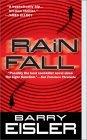
Rain Fall - Barry Eisler

"Down these mean streets a man must go who is not himself mean, who is neither tarnished nor afraid... He is the hero, he is everything. He must be a complete man and a common man and yet an unusual man. He must be, to use a rather weathered phrase, a man of honor, by instinct, by inevitability, without thought of it, and certainly without saying it. He must be the best man in his world and a good enough man for any world. " - Raymond Chandler

Set in Tokyo, Barry Eisler's book Rain Fall (and it's sequel Hard Rain) is an excellent, hard-boiled Chandleresque action-thriller about an assassin-for-hire that specializes in "natural deaths". Half-Japanese, half-American, Eisler's John Rain is a character in the classic Chandler mold - a man with his own particular rigorous code of honor. When a client violates that code by lying to Rain, he is forced into investigating the circumstances of the murder he has just committed. Following a labyrinthine trail Rain finds himself caught between the competing interests of both his countries, the Yakuza, and the deeply held corruption of the Japanese political scene.

Eisler's character, setting and circumstances move Rain Fall and its sequal Hard Rain a cut above the common action-thriller. Rain's cultural background and profession make for an interestingly agreeable anti-hero with all the requisite nicities. Eisler's depiction of the neon reef that is modern Tokyo is, however, superlative.

Eisler successfully captures the unique feel and setting of the city of villages, the legions of salari-men packing the trains, the glare and needle-sharp opulence of the Ginza, the noise and bustle of Shinjuku and hectic ambience of Roppongi clubs. Eisler seems to be one of the few fiction writers who capture the essence of how a city feels, not just how it looks and his familiarity and love of Tokyo permeates the book. It brought back to me the feel of walking through Shinjuku in the cold night rain, the sky lit only by the towers, the streets wet and slick with water and light, the scattered groups of drunk salari-men meandering past with the loose rhythm of the elevated train runbling overhead and the blaring, relentless accompaniment of the pachinko parlors and the arcades spilling out of their bright doorways...

Tokyo's one hell of a city, and deserves to be featured in more fiction...

Rain Fall and Hard Rain are both solid thrillers and well worth a read. It's a series I plan to follow in the future.

For more background on Eisler's Japan, check out The Enigma of Japanese Power by Karel Van Wolferen, Ruth Benedict's classic The Chrysanthemum and the Sword, and, for a look at the youth of Japan, read Speed Tribes by Karl T. Greenfield.

For some Tokyo bloggers, check out Tokyo Shoes, and Hunkabutta.

For some background on the Yakuza, check out this site, and Court TV's Library site. Personally I recommend Robert Mitchum in The Yakuza for a more enjoyable learning experience!

For another film that truly captures the essence of Tokyo, watch Lost in Translation...it has that jet-lagged feel.

Comments and links to BookLinker are always welcome!

Wednesday, April 21, 2004


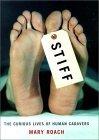
Stiff: The Curious Lives of Human Cadavers - Mary Roach

Deeply unsettling, morbidly funny, weird and disturbingly fascinating, Stiff: The Curious Lives of Human Cadavers by Mary Roach is an unvarnished, questions-that-most-dare-not-ask, slightly off the wall examination of ...well, the practice and usage of human remains through history.

If it sounds like a bit of a reach, delving into a subject that most writers (and readers for that matter) would not care to visit, Stiff is a surprisingly good read. Skillfully written, tactful, sympathetic, respectful without being dull and heavy, strange without quite being off-putting, author Mary Roach weaves the ins and outs of such subjects as mortuary science, the history of surgery, autopsies, where plastic surgeons go for practice, medical experimentation, jello and gunshot wounds, crucification, human crash-test dummies, mummification and more into a riveting stew...just don't read it over your lunch hour. Seriously.

Stiff, despite its title, is anything but. Roach has a disconcerting habit of asking the people in charge questions that we all would have liked to ask, but were either too polite, too self-conscious or squeamish to ask. These queries, although they seriously make the reader question whether Roach would be someone to invite to a cocktail party, serve to beatifully illustrate the quandaries that we ourselves face, when confronted by the implacable certainty of The Father of Time.

My particular favorite moment was when the author was observing the "harvesting" of a doner heart from a brain-dead patient. Seeing the slippery, still-beating muscle being extracted, Roach promptly asked the doctor if they had ever dropped one on the floor...

Overall a well-written, excellent (if somewhat nausous) read. Remember to read outside of mealtimes...

For a look at the Internet's resident cadaver, check out The Virtual Man Project at the National Library of Medicine. Researchers froze a cadaver, then sliced it in ultra-thin slices creating an anatomically detailed virtual representation of the human body....For an added bonus, visit The Virtual Autopsy here or HBO's Autopsy website.

Just so you don't think it's just people under the surgeon's knife - someone autopsied a furby...

Here's some real Crash Test Dummies....and some more (especially 50th Percentile Hybrid III).

Lastly, here's the most famous cadaver of them all....It's Alive! ALIVE!

Thanks for dropping by BookLinker! Please tell all your friends, link to the site, toss off some comments and buy some books!

Wednesday, March 24, 2004


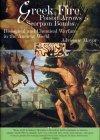
Greek Fire, Poison Arrows & Scorpion Bombs: Biological and Chemical Warfare in the Ancient World by Adrienne Mayor

Hercules was probably one of the most famous early practioners of biological weapons, and one of its most prominent victims...

Slayer of the Lemean Hydra, Hercule's dipped his deadly arrows in the Hydra's blood, creating a fatal weapon - one that echoed down through Greek history claiming myrid lives. Eventually the Fates drew him full-circle and Hercules is destroyed by the gift of a cloak from his wife. The garment, secretly poisoned with the blood of Nessus, a centaur that Hercules has shot with his envenomed arrows, "burns like fire" until Hercules, in agony, begs his own son to burn him in a bonfire.

The legendary story of the 12 Labors of Hercules serves as both metaphor and warning in Adrienne Mayor's fascinating and highly readable examination of the usage and prevelance of biological and chemical warfare in the Ancient World. Greek Fire, Poison Arrows and Scorpion Bombs is a timely and relevant eye-opener, touching on the practical usages of such tried and true weapons such as poisoned food, tainted water, bug bombs (scorpions and bees were apparently popular tools to loft onto besiging armies), snake bombs, burning oil, pestilence-ridden corpses, maddened cattle, pitch-covered pigs (ignited of course) and, of course, the precusor of modern napalm, greek fire. Of special note is the "mad honey" that Xenophon and the Ten Thousand encounter on their trek to the sea. Mixed from the rhododendron plant, the honey of Pontus is a famous and lethal toxin causing hallucinations and often death.

Mayor carefully outlines the often ambigious nature of chemical and biological weapons, particularly the fact that the ancients recognized the double-edged sword that they wielded had terrifying implications for their own populations if used unchecked. Mixing the mythological roots of bio-war with historical examples, Mayor has written a highly readable, utterly absorbing piece of work that, at the end, leaves you grimly fascinated and nervously appalled.

For some terrific information on the ancient world and such stalwarts as Hercules, check out the Perseus Project from Tufts University.

Worried about that fever? Check out the National Library of Medicine's Biological Warfare page...brrrrr. Hey, where'd that rash come from?

Damn, those guys are busy - here's their page on Chemical Warfare...damn, now there's spots with the rash...

Lastly, here's a copy of Sophocle's "Philoctetes", the tale of the man who inherited the dubious prize of Hercule's poisonous arrows...

Thanks for reading. Please post comments below. Links would be appreciated.

Monday, March 01, 2004

Positively Fifth Street: Murderers, Cheetahs, and Binion's World Series of Poker
- James McManus


"Never play cards with a man called Doc." - Nelson Algren

I've never played a serious game of poker in my life.

The few times I've sat down and played a few hands, it has been in almost total ignorance of the odds, poker strategy and anything but the most basic dos and don'ts...but...the first thing I wanted to do having finished Positively Fifth Street was jet down to Vegas and set myself down at a table.

James McManus's book Positively Fifth Street: Murderers, Cheetahs and Binion's World Series of Poker is, for lack of a better word, infectious.

McManus was assigned by Harper's Magazine to cover the simultaneous twin stories of the Ted Binion murder trial and the annual Binion's World Series of Poker held at the Horseshoe Casino in Las Vegas, the arguably most famous poker tournament in the world. McManus, a journalist, author and poet, also happened to be an itinerate amateur poker player who elected to use his $4,000 advance from Harpers to fund his own entry into the tournament (Read the book to find out how he did. Unlike the NY Times book review (SPOILER WARNING) , I refuse to spoil it for you by divulging the results...What were they thinking?).

The book offers a rather piecemeal look at Ted Binion's murder, using the crime more as an illustrative and cautionary tale of the author's own personality - the risk-taking, obsessive, "cliff-diver" face that McManus tries to generally keep in check ("Bad Jim" as McManus aptly terms himself). If you are looking for the details of a sordid crime drama, Positively Fifth Street covers the basics (Binion's tawdry drug use, the aspiring, leggy stripper girlfriend, the low-life pal who hooks up with her and plots Binion's ultimate demise, the fundamentals of "burking" and so on...), but is far more focused on the legacy of Binion in the poker tournament then on Binion himself. The murder trial does loom ominiously in the background but it seems to serve more as a grim reminder of the dangerous price of an unchecked lifestyle than as a raison-e'etre for the book, akin to the images of Death that can be seen perpetually lurking in the corners in a Renaissance painting. The murder is a reminder of mortality, chance and fate, and the luck of the cards.

Once the pasteboards start to hit the table, the book truly takes off, mixing each stage of the tournament action with a look at the intricacies of poker, the rise of "book-learned" system poker players, the rules of Texas Hold 'Em, the history of playing cards, and vivid portraits of the top professional poker players such as the cantakerous TJ Cloutier, top female player Kathy Liebert and others. McManus has woven a startling page turner that bluntly fascinates from beginning to end.

Interested in learning how to play Texas Hold 'Em? Check out Ultimatebet.com for the rules.

Author, blogger and actor Wil Wheaton drew my attention to Positively Fifth Street a while back through a mention of the book on his site and, as a poker player himself, recently posted a vivid and terrific piece on his own adventures in an illegal poker tournament at the Odessa in Hollywood. It's well worth a read.

Here's where you can find Binion's Horseshoe Casino in Las Vegas, everything you need to know about the World Series of Poker, and Court TV's take on the Ted Binion murder trial.

If you are really, really taken with Positively Fifth Street, then this site might be for you....

Comments are always welcome, book suggestions, feedback and links to the site.

Thanks for reading!


Wednesday, February 18, 2004

Watership Down - Richard Adams

"El-ahrairah, your people cannot rule the world, for I will not have it so. All the world will be your enemy, Prince with a Thousand Enemies, and whenever they catch you, they will kill you. But first they must catch you, digger, listener, runner, prince with the swift warning. Be cunning and full of tricks and your people shall never be destroyed." - Lord Frith to El-ahrairah

If you proposed to someone that they read a 478-page book about rabbits, they would probably either look at you sideways like you were utterly insane or shout out in joyous recognition "Watership Down!". Richard Adams first published his utterly compelling tale of adventurous rabbitry in 1972 and the tale remains to this day one of the most creative and enjoyable pieces of children's literature ever set to paper.

Adams tells the story of a small band of rabbits that, aided by a prescient seer named Fiver, sets forth on a harrowing journey across the English countryside, escaping from their doomed warren (destroyed by land developers) to seek a safe home high on the Downs. The rabbits' odyssey take them through numerous fateful encounters, both treacherous and inspiring until, tempered by their adversity, they find themselves forced to face their most difficult challenge of all, using all their guile, skills and bravery against the repressive and dictatorial warren of Efrafa and its leader, the malevolent and powerful General Woundwort.

Adams prose vividly describes and awakens the English countryside in the mind of the reader, from a rabbit's point of view. You can almost feel the grass under your toes. Indeed, one of the few things I readily wished for while reading Watership Down, was a version abridged with sketches or pictures of all the damn plants (fleabane, purple loosestrife, pink butterbur, figwort, yellow mullein...the list goes on. I suspect one needs a certain grounding in botany to truly appreciate Adams understanding of the English countryside.). The other side of the coin is the strength of the various characters - Hazel, the decisive, intelligent leader; Fiver the precognitive runt whose intelligence and visions see the rabbits through diverse sets of danger; Bigwig, the rough-and-tumble fighter who refuses to give in - ever, and Woundwort himself as the battle-scarred and vicious, intelligent and obsessive rabbit that rules Efrafa with an iron paw.

Rich with political allegory and echoing with the touchstones of epic journeys, Watership Down is a book that, if you have not yet read it, will surprise you with its ability to pull you into the Lapin world. It remains a terrific piece of literature.

Of particular note within the book are the various tales of El-ahrairah, the Prince of Rabbits, interspersed within the story. El-ahrairah is a trickster, filled with cunning strategems who foils his enemies, infiltrates every lettuce patch and, in general, fulfills a legendary role within rabbit folklore. Of particular note is the recently published Tales from Watership Down, which collects a number of El-ahrairah's adventures (including several new ones) into a single volume. It is well worth a read.

For a look at the real Watership Down, Nuthanger Farm and the Crixa (they are all real places), check out this site.

Interested in a plot review and notes on Watership Down - you can find them here.

Finally, at least one blogger seems to know and appreciate the lore of Watership Down - check out the excellent Silflay Hraka. Read the book to find out what Silflay Hraka means....

If you can't bring yourself to read the book, there is a very good animated feature (done in 1978) which, barring an unfortunately syrupy theme song by Art Garfunkel (Bright Eyes), is true to the book in almost every way. It is now available on DVD and I highly recommend it (although it might be a little bit bloody for the wee tots...).

Comments are always welcome.

On a follow-up note, BookLinker is slowly trying to increase its traffic levels, so any links, comments, feedback, recommendations, friends, acquaintences, evil step-sisters etc. that you want to refer to us, it would be appreciated!

Thanks for reading!


Wednesday, February 04, 2004

Monster of God - David Quammen

Walking downtown one day, a number of years ago, I was startled by a massive tawny head that peered around a concrete pillar and regarded me with a baleful, quizzical yellow glare. You don't generally expect to run into a full-grown African lion in the heart of a teeming metropolis. I stopped dead, an act that attracted its immediate attention, despite the more jaded urbanites that crowded the sidewalk and barely glanced at this apparition of the savannah as they passed. There is something about being the focus of a predator's gaze that puts a particular tingle in your day. Somewhere, buried very deep is that primodial recognition that there, but for the grace of God, go you....

Monster of God is a look at the role of the predator, in nature and in the mind of humanity, and the tenuous borders where the two uneasily mix. Author David Quammen looks at four "alpha" predators, creatures that live at the very apex of the food chain: The Gir lions of India, the crocodiles of Asia, Africa and Australia, the brown bear in Romania, and the Amur Siberian tigers of Asia. Monster of God looks at the relationship that the predator has with man, the social and cultural role of the predator, its key position within the natural world, and the deleterious impact the the burgeoning human population is having on the predator's environment.

Monster of God is a thoughtful, intelligent and highly readable examination of how humanity lives with predators. Quammen looks at what is the acceptable role in today's world for violent, essentially dangerous animals that can and quite readily do, kill people for food, their position as "keystone" species on the food chain, their position as totemic symbols within human history, language and culture (think about it, even today people are "lionized") and how economic realities of hunting and farming may shape their future. He examines the disparities that exist across the world in attitudes towards alpha predators, particularly noting the fact that where predators and people most often, most tellingly meet, is among the poorer marginal fringes of human society, left to deal with the beasts that haunt the dark nights and quiet waterways. It's easy to say "save the tigers" when you don't have to cut wood in the forest to earn a living, or walk a cold trapline to support your family, hoping not to run into something hungry and toothy.

Here's a brief excerpt: "Great and terrible flesh-eating beasts have always shared landscape with humans. They were part of the ecological matrix within which Homo sapiens evolved. They were part of the psychological context in which our sense of identity as a species arose. They were part of the spiritual systems we invented for coping. The teeth of big predators, their claws, their ferocity and their hunger, were grim realities that could be eluded but not forgotten. Every once in a while, a monsterous carnivore emerged like doom from a forest or a river to kill someone and feed on the body. It was a familiar sort of disaster - like auto fatalities today - that must have seemed freshly, shockingly gruesome each time, despite the familiarity. And it conveyed a certain message. Among the earliest forms of human self-awareness was the awareness of being meat."

For more on the Gir lions, check out The Indian Wildlife Portal and the Gujarat Forest site.

For some further background on crocs, check out this site, or just hang out with the Crocodile Hunter.

One of the interesting facts that Quammen touches upon in his book is the hunting excesses of Romanian Communist strongman Ceausescu, who was notorious for, among other things, turning Romania's wildlife managment system into his own personal game shooting park, slaughtering every large beast that came within reach, including 24 brown bears in a single day.

Check out the Chauvet Cave site for a marvelous look at some of the earliest known prehistoric art, featuring, among others, some superlative depictions of lions...

Finally, if you have a literary turn, you can always peruse the quintessential story of man versus monster - the tale of Beowulf, King of the Geats, in his rending, bloody battle with the fearsome Grendal...

My downtown lion? He was being used to advertise some new boutique that was opening. I don't recall the name of the store, but I will long remember the grace, dignity, strength and banked, predatory gaze of that lion...even though he was sprawled across a mailbox of all things...

Comments are always welcome. Bloggers, please drop me a link if you like what you read. Thanks!


Wednesday, January 28, 2004

Michelangelo and the Pope's Ceiling - Ross King

Surly, often sullen, perpetually brooding, argumentative, distrustful, highly competitive, monstrously creative and ugly to boot, Michelangelo Buonarroti was a sculptor of genius. Ross King's superlative book Michelangelo and the Pope's Ceiling tells the story of how this tempermental artist created one of histories greatest art treasures, the ceiling frescos of the Sistine Chapel.

King draws a crisply written and fascinating portrait of Michelangelo, including his stormy relationship with his family, patrons and fellow artists, his chaotic life and times, and the myriad background sources of his artistic and creative vision. A contemporary of Leonardo Da Vinci and later Raphael, Michelangelo famously sculpted both the Pieta and David. His skill as a sculptor brought him to the attention and patronage of Pope Julius II, il papa terrible. Known for his fiery temper, a penchant for striking his cardinals and servants liberally with his walking stick and a highly militaristic, almost imperial ambition, Julius commissioned (almost coerced actually) Michelangelo into painting the ceiling of the Sistine Chapel - all twelve thousand square feet of it.

King's book is filled with insight and detail, outlining the difficulties that Michelangelo faced "painting in the wet" (fresco literally means "fresh" as in wet or fresh plaster, as the colors are applied before the plaster can dry), the engineering of the Sistine Chapel's scaffolding, the usage of fixed perspective, the color scheme and biblical and mythic themes of the various frescos.

The book is, thankfully, well illustrated with details, including excellent color images of the Sistine Chapel, a necessary element that helps unfamiliar readers such as myself enormously in understanding the overwhelming scale of the projects (it took more than four years to complete).

Here's a brief excerpt on the bitter rivalry between Da Vinci and Michelangelo when both were commissioned to fresco opposite walls of the refectory in Santa Maria delle Grazie:

"This artistic duel was made even more compelling by the two artists' well-known dislike of each other. The surly Michelangelo had once taunted Leonardo in public for having failed in his attempt to cast a giant bronze equestrian statue in Milan. Leonardo, meanwhile, had made it clear that he had little regard for sculptors. 'This is a most mechanical exercise,' he once wrote, 'accompanied many times with a great deal of sweat.' He further claimed that sculptors, covered in marble dust, looked like bakers, and that their homes were both noisy and filthy, in contrast to the more elegant abodes of painters. All Florence awaited the outcome."

For a look at the fruits of Michelangelo's labors, check out the Sistine Chapel here, here, and here. And for good measure, here as well.

For a look at the restoration process (and some nice before and after images) check out the Artcyclopedia andthis site.

Among other items, King points out the habit of many artists (Michelangelo among them) of putting sly jokes and hidden messages within the content of their work, much as medieval monks would draw humorous pictures in the margins of their lavishly illustrated books (called "marginalia") or, in a more modern context, the 'easter eggs' found in many software programs. Check out this image (click to enlarge) and zoom in on the cherub in the back's right hand. He's giving her "the fig"...

Thursday, January 22, 2004

Harry Potter and the Order of the Phoenix - J. K. Rowling

What more can one say about J.K. Rowlings and the most famous boy in wizardom?

Since last summer, I've been working my way steadily through all five of the Harry Potter books (Harry Potter and Philosopher's Stone, Harry Potter and the Chamber of Secrets, Harry Potter and the Prisoner of Azkaban, and Harry Potter and the Goblet of Fire), reading them aloud to my five-year old son. Most recently, thanks to the benevolence of Santa Claus, we've been ripping through Harry Potter and the Order of the Phoenix.

I say ripping because my enthralled son insisted on reading the 870-page book nightly, often for more than an hour at a time (which, if you have a five-year old and you are reading something that has no pictures, is definitely saying something about the author's ability to capture his interest!).

In Harry Potter and the Order of the Phoenix, J.K. Rowling continues to build on both the depth of her imaginary magical world and on the steady growth of the characters. Harry Potter is returning to Hogwarts School of Witchcraft and Wizardry for his fifth year, despite the ominous indications that (as seen in Book IV) He-Who-Must-Not-Be-Named (that's the evil Lord Voldemort, for the three people left in the world who haven't either read the books or seen the movie) has returned.

Harry, and his growing array of friends and allies (the Order of the Phoenix in the title) must face down enemies both within and without as Harry faces the multiple challenges of his cousin Dudley, rogue Dementors, OWL (Official Wizarding Levels) exams, bad press, first romance and a malevolent new "headmistress" at Hogwarts....and the machinations of Voldemort and his DeathEaters.

Despite the length, the book doesn't sag or lack. At times it is pure adventurous exhilaration and fun, and although some sections are somewhat slow, I found that as a reader, I was so invested in the characters, the world and the setting, that the occasional slow section was barely noticable. You should note that if you are reading the book to younger kids, you may wish to self-edit some of the more frightening bits and pieces. This is also a good excuse to read ahead....

All in all, we loved Harry Potter and the Order of the Phoenix and are eagering anticipating the next book in the series. Get to work Ms. Rowling!

I have read in the media that some people have complained at times regarding the content of the Potter books.. Let's face it - these books offer up terrific, imaginative, thoughtful, adventurous reads that successfully pull kids and adults away from the pale everyday gleam of the cathode ray tube and gets them to read! Kids! Reading! Who'd have thunk it?

J.K. Rowling deserves to be congratulated for that fact alone (but I suppose being richer than the Queen is probably enough).

Interested in finding out exactly what are Muggles, Hippogriffs and Bowtruckles? Consult the Harry Potter Lexicon for all your wizarding queries.

Check out the trailer for the upcoming Harry Potter movie, Harry Potter and the Prisoner of Azkaban.

Interested in visiting Hogwarts?

Lastly, since it is an election year....


Wednesday, January 14, 2004

The Year in "Review"

Well, BookLinker is now officially a one-year old!

On the off chance anyone is interested, here are some BookLinker benchmarks:

- In the last year, BookLinker has reviewed 38 books, not quite the "one book per week" I was aiming at, but not bad considering....I've read probably three times as many.

- BookLinker has received 2418 unique visitors in the past year. It's not Instapundit, but I'm pleased! My busiest single day was courtesy of Jerry Pournelle (the sci-fi writer) who kindly linked a book recommendation I dropped him and sent me 45 people in one day. Most days I average 6 visitors and, while I am happy to have the 6, I wouldn't mind increasing that traffic a tad, so if you blog, and you happen by the site and like what you see, I'd be pleased for a link and some mention (translation: Please send me some traffic, link to me - please, please, I'm beggin' ya...).

- Despite the malarky at the start of the page concerning the funding of my early retirement, my role as an Amazon associate works out to considerably less than minimum wage. In the past year, I've cleared $6.37 in Amazon commissions ($4.35 of which came in my whirlwind "Christmas rush" recently - that was two sales). Consider that each review generally takes about an hour to write and another hour (sometimes longer) to develop the subject links, and you are looking at probably about 85 hours worth of labor (not counting reading time), for a return of roughly $0.075 per hour. At this rate, I will be able to afford a 612 Scaglietti in another 43,000 years. I can hardly wait!

- A couple of people have commented to me that I tend to review too many non-fiction (in particular nautical-related history). Well, as I warned you at the start, you are stuck with my particular reading tastes and lately it has been inclined towards the non-fiction arena, mainly due to the relative dearth of fiction that has been appealing to me in the past year. Tough on you, but who knows, try reading some of the books or throw me some suggestions via email or the comments system. I love feedback and unfortunately recieve it very limited amounts...Maybe I should throw up some intense political debates on this site instead....Naw!

- Someone else noted that I seem to love all the books I read. Actually, no I don't. I do, however, tend to review the books I like best, so negative reviews just don't happen - they get filtered out by my own energy and enthusiasm. Unlike newspaper or "real" book reviewers, I'm doing this out of choice not (as you can see from the above sums) for the princely wages that blogging provides. This frees me from the onerous task of reviewing books I despise or dislike...except when I choose to.

- One of the single best comments I received during the year was actually from Matthew Pearl, author of The Dante Club, which I reviewed. He commented via email "Thanks so much for the nice write-up of my novel on your website. I really appreciate such thoughtful and well-written comments. By the way, great site!", praise that almost made me blush.... Garrett Soden, author of Falling, also emailed some great site feedback and was kind enough to bring the site to the attention of Howard Owens who also very kindly threw up a link (thanks Howard!).

Damn nice of 'em to notice.

In closing, I just wanted to say thanks to all BookLinker readers for your many visits (and for the $6.37). I hope you continue to drop by, link to us and tell all your friends. Maybe in 2004 I can clear the $10 minimum necessary for Amazon to actually mail me a check!

Thanks! Keep on blogging!

Wednesday, January 07, 2004

1421: The Year China Discovered America - Gavin Menzies

History is a fuzzy subject.

The one real, inescapable truth that comes out of any serious assessment of history is, realistically, how little you actually know about the in's and outs of events, societies and people.

When you dig through dusty, moldy and sometimes starkly biased historical documentation or try to comprehend the social intricacies of an era by perusing a handful of broken pot shards, post holes and chipped foundation stones, you are, in essence, piecing together a barely legible puzzle, with incomplete pieces and an uncertain understanding of just what the hell a puzzle actually is...

I preface this review with the above remarks because I am very aware of how damnedly difficult history and archaeology can be as a subject and in Gavin Menzies' book 1421, I'm sorry to note the author has overreached his subject. He has shot for the moon, and fallen sadly well-short.

1421 outlines Menzies' theories regarding the exploits of Emperor Zhu Di's famous five Admirals (Zheng He, Yang Qing, Zhou Man, Hong Bao and Zhou Wen) who, under Imperial command, set sail in five massive fleets of sea-going junks in 1421 to "proceed all the way to the end of the earth to collect tribute from the barbarians beyond the seas". Menzies attempts to trace the routes of the five fleets, drawing on what little written historical record exists (the fleet records were destroyed by Zhu Di's somewhat xenophobic successor), a number of early maps and charts, and a huge pile of unfortunately highly subjective and circumstantial evidence.

Menzies traces the five fleets literally around the globe, touching on literally every continent and region including North, Central and South America (both east and west coasts), the Caribbean, Africa (which, actually does have evidence of Chinese contact on the east coast at any rate as the region was well-travelled by Arab voyagers who, among other destinations, regularly plied their trade with China), Russia, Greenland, Australia, and Antarctica.

While some of the work that Menzies assembles crys out for a more scholarly and searching examination (namely his persistant claims to have uncovered evidence on a number of charts for Chinese contact with Australia and the U.S.'s west coast, and his evidence that the Chinese had developed significant navigational advances well in advance of Europe) the majority of his assumptions are built on a succession of loose guesses and highly circumstantial and subjective evidence. Indeed, towards the end of the book (when a Chinese fleet has landed almost everywhere it is possible to discover except for Europe), Menzies seems almost frantic to buttress his arguments. In Menzies' hands, the fall of every sparrow is attributable to the five fleets.

Despite the highly questionable conclusions, 1421 does offer several highly commendable points - it brings to light an era of Chinese history and discovery that hitherto has been sadly under-examined by historians and raises a number of questions regarding the reach of the intrepid voyage of the Five Fleets. The author's passion and excitement for his subject is clearly evident in his writing and although it overreaches, it's nice to see someone shooting for the moon once in a while...

Incidentally, the book was titled 1421: The Year China Discovered the World everywhere except in the United States (where, as shown above, it was entitled 1421: The Year China Discovered America). I know that U.S. publishers routinely tweak titles to make them more applicable and appealing to U.S. markets but puh-leeze...Doesn't it seem a trifle ridiculous and condescending to think that we would only care to read it if it was about us? Next thing you know they'll be changing the titles of the Harry Potter books because people don't know what a Philosopher's Stone is....oh...wait a minute....they did change that one too. Oh. Sorry.

For more on 1421, check out the author's website (it includes still more evidence not included in the book).

Find out more about the famous Piri Reis Map (cited in the book several times) here, here and here. You can also find the Kandigo map, and the Pizzigano Chart from the James Ford Bell Library (which has some excellent additional materials well worth a look (such as this)).

Always wanted to learn more about Chinese history? (Try here as well). or you could just watch this....it's not history, but its damn fine cinema.

Comments are always welcome!


Monday, December 22, 2003

Merry Christmas!

'Twas the night before Christmas, when all through the house
Not a creature was stirring, not even a mouse;
The stockings were hung by the chimney with care,
In hopes that St. Nicholas soon would be there;

The children were nestled all snug in their beds,
While visions of sugar-plums danced in their heads;
And mamma in her 'kerchief, and I in my cap,
Had just settled down for a long winter's nap,

When out on the lawn there arose such a clatter,
I sprang from the bed to see what was the matter.
Away to the window I flew like a flash,
Tore open the shutters and threw up the sash.

The moon on the breast of the new-fallen snow
Gave the lustre of mid-day to objects below,
When, what to my wondering eyes should appear,
But a miniature sleigh, and eight tiny reindeer,

With a little old driver, so lively and quick,
I knew in a moment it must be St. Nick.
More rapid than eagles his coursers they came,
And he whistled, and shouted, and called them by name;

"Now, DASHER! now, DANCER! now, PRANCER and VIXEN!
On, COMET! on CUPID! on, DONDER and BLITZEN!
To the top of the porch! to the top of the wall!
Now dash away! dash away! dash away all!"

As dry leaves that before the wild hurricane fly,
When they meet with an obstacle, mount to the sky,
So up to the house-top the coursers they flew,
With the sleigh full of toys, and St. Nicholas too.

And then, in a twinkling, I heard on the roof
The prancing and pawing of each little hoof.
As I drew in my hand, and was turning around,
Down the chimney St. Nicholas came with a bound.

He was dressed all in fur, from his head to his foot,
And his clothes were all tarnished with ashes and soot;
A bundle of toys he had flung on his back,
And he looked like a peddler just opening his pack.

His eyes -- how they twinkled! his dimples how merry!
His cheeks were like roses, his nose like a cherry!
His droll little mouth was drawn up like a bow,
And the beard of his chin was as white as the snow;

The stump of a pipe he held tight in his teeth,
And the smoke it encircled his head like a wreath;
He had a broad face and a little round belly,
That shook, when he laughed like a bowlful of jelly.

He was chubby and plump, a right jolly old elf,
And I laughed when I saw him, in spite of myself;
A wink of his eye and a twist of his head,
Soon gave me to know I had nothing to dread;

He spoke not a word, but went straight to his work,
And filled all the stockings; then turned with a jerk,
And laying his finger aside of his nose,
And giving a nod, up the chimney he rose;

He sprang to his sleigh, to his team gave a whistle,
And away they all flew like the down of a thistle.
But I heard him exclaim, ere he drove out of sight,
"HAPPY CHRISTMAS TO ALL, AND TO ALL A GOOD-NIGHT!"

'Twas the Night Before Christmas or Account of a Visit from St. Nicholas by Clement C. Moore

Wednesday, December 10, 2003

Holiday Picks!

As the holiday season is now lurching towards us inexorably like some drunken store Santa searching for a bathroom, I wanted to take this opportunity to present you with BookLinker's Top Ten Holiday Book Picks.

I hope that this makes your holiday shopping burden a trifle easier and please remember that if you click through to Amazon on this site and buy your books, I will receive a very small stipend...regretably very, very small....(sigh). In case anyone thinks I plan to retire to Monte Carlo on this - please be assured that the $1.67 in funds I expect to receive will be spent entirely frivously on chocolate...

On to BookLinkers Top Ten Holiday Books!

10). The Complete Far Side by Gary Larson - What can I say that anyone who has read even a single Far Side cartoon doesn't already know? Pricelessly off-kilter and fun!

9). The Dante Club by Matthew Pearl - Engrossing, literate, involving historical thriller! Damn fine!

8). The Devil in the White City : Murder, Magic, and Madness at the Fair That Changed America by Erik Larson - Desperately need to post the review for this one so in two words: just excellent!

7). Jarhead : A Marine's Chronicle of the Gulf War and Other Battles by Anthony Swofford - Another pending reviews: Jarring, uncomfortable, profane and starkly unsettling but one of the best works in many a year...

6). Moneyball: The Art of Winning an Unfair Game by Michael Lewis - Yet another pending review (Damn, I need to post more often don't I?). Perfect for the baseball junkie on your gift list, well-written and throughly enjoyable.

5). By the Sword: A History of Gladiators, Musketeers, Samurai, Swashbucklers, and OlympicChampions by Richard A. Cohen - Swashbuckling through the ages, an unbeatable history book that's great fun to boot!

4). Charlie Wilson's War: The Extraordinary Story of the Largest Covert Operation in History by George Crile - A must for the spy thriller and history junkie, it tells a story that you just plain won't believe until you read it...

3). The Pirate Hunter: The True Story of Captain Kidd by Richard Zacks - Pirates. Need I say more?

2). Seabiscuit: An American Legend by Laura Hillenbrand - The best sportsbook of the year...(and another outstanding pending review. Boy do I have a lot to answer for...)

and the Number One Pick for 2003 is....

1). Life of Pi by Yann Martel - Excellent, engrossing, thoughtful and provocative! A real winner!

As an added addition to my Top Ten Books, here is my 7 Worst, Most Overratted, Avoid-at-all-Costs books for 2003....Dan't even think about buying these books...yes, I'm talking to you. Don't do it...well, okay maybe for your mother-in-law...

7). A Short History of Nearly Everything by Bill Bryson - I love Bill Bryson but this one is unfortunately lengthy, somewhat dull and not nearly as enjoyable as previous works...not bad but probably not a great holiday gift.

6). Prey by Michael Crichton - Why even bother?

5). Stupid White Men ...and Other Sorry Excuses for the State of the Nation! by Michael Moore - Nice to see that America still has professional gadflies and people challenging the system but am I the only one who wishes that he would just go away for awhile?

4). Lies and the Lying Liars Who Tell Them: A Fair and Balanced Look at the Right by Al Franken - I have nothing against Al Franken. He is funny...sometimes... but am I alone is just finding this more of the same?

3). Who's Looking Out for You? by Bill O'Reilly - If these guys spent half as much energy thinking as they do yelling at each other, the world would be a much nicer place...quieter too...

2). The South Beach Diet: The Delicious, Doctor-Designed, Foolproof Plan for Fast and Healthy Weight Loss by Arthur Agatston - In all honesty: didn't read it. Eat less. Exercise more. Balanced diet. There, you're done! Save your money.

1). The Teeth of the Tiger by Tom Clancy - Bad. Really bad. Well, actually unfortunately worse then really bad. Extremely lame effort by the king of the techno-thrillers. Lengthy. Boring. It is also obviously a larger work deliberately truncated into two books. We can probably expect the next one next year. On the positive side it weighs less then some of his recent work...

Enjoy your holiday shopping!

Monday, December 01, 2003

Life of Pi - Yann Martel

It was the bookjacket that caught my eye.

I've never been much of a "literary" reader. I think it had to do with too much D.H. Lawrence, William Faulkner and Virginia Woolf in school. The net impact of that particular school of great literature was to drive me irrevocably away from anything remotely literary for years, if not decades...

Oh I like classic literature but my taste runs more towards the ancients and the swashbucklers- The Odyssey remains a prime favorite, Beowulf, Shakespeare and Scharazade all grace my library shelves and as for literature from the last century or so, give me Dumas, Kipling, Robert Louis Stevenson, Arthur Conan Doyle, ER Burroughs, Twain and H.G. Wells and keep the rest...

Life of Pi might be literary according to the critics, but I'll warrant it has more in common with the Odyssey then it does any other literary tome. Yann Martel has crafted an evocative travelers tale, an odyssey story of sorts that weaves almost magically into your head and leaves you, in the end, puzzling over the journey, your own as well as the book's.

Life of Pi is the lyical and imaginative story of Piscine Patel (the Pi of the title), a 16-year old boy on a spiritual journey of faith that takes an abrupt left turn when he is cast adrift in a lifeboat by a shipwreck, alone on the high seas - except for the one unique passenger on his boat - a full-grown 450 lb. adult Bengal Tiger named Richard Parker.

Pi's odyssey is a parable of faith, imagination and, oddly enough, zoology, giving you a quick,vivid and surprisingly effective lessons in animal pyschology and lion-taming. Martel's fable is at times harrowing, uplifting and intense, drawing you into the shared plight of both Pi Patel and Richard Parker. Life of Pi is one of those stories that you find yourself mulling over long after the book is closed. It is, on many levels, one of the most mesmerizing stories I have read and Martel's prose gifts readers with a real treasure.

How long can you survive adrift at sea? The record very probably belongs to some poor unknown sailor whose story never came to anyone else's ears but for a true survivors' tale check out Adrift: Seventy-six Days Lost at Sea by Steven Callahan.

Here's some more castaways for you....

And some more Pi...

Interested in tigers? Here's a little proverb:

"Trouble rather the tyger in his lair,
than the sage among his books,
for to you
Kingdom's and their Armies
are things mighty and enduring,
but to him
they are but
toys of the moment,
to be swept away
with the flick of a finger."


For more on tigers, check out 5Tigers Tiger Information Centre, Tigers in Crisis, and the Tiger Foundation.

You might also like these guys...Magnum P.I. did.


Thursday, November 20, 2003

Charlie Wilson's War: The Extraordinary Story of the Largest Covert Operation in History
- George Crile


"When you're wounded and left on Afghanistan's plains,
And the women come out to cut up what remains,
Jest roll to your rifle and blow out your brains
An' go to your Gawd like a soldier."
- Rudyard Kipling, 'The Young British Soldier'


When you study history in school, everything seems very structured and comprehensive, very coherent when viewed through the lense of economics and cause-and-effect. History is all about treaties and laws, trade, economic theory, statesmen and the hard realism of power....but then, time and time again, as you flip through the pages of history, they come at you - rollicking out of the mist with some grand wild-eyed vision, a chaotic elemental force that just seems to skew everything sideways...and at the end of the day you are left surveying an empire in ruins, millions of people freed from oppression and a blowback that is today, still only barely understood or acknowledged.

At the end of the day, Zia ul Haq's observation "Charlie did it." rings utterly true.

Charlie Wilson was a womanizing, alcoholic wastrel, an East Texas congressman best known for his booming voice, drinking, congressional junkets and proclivity for showgirls and Playboy bunnies. He was also the hinge and the catalyst for the largest covert operation in history - the war against the Soviet Union in Afghanistan.

Charlie Wilson's War is, quite frankly, an extraordinary piece of work. George Crile, a producer for the television news show 60 Minutes, has put together a vivid and fascinating book that tellingly examines how a U.S. congressman essentially hijacked U.S. foreign policy into supporting the Afghan mudjahideen to the tune of hundreds of millions of dollars.

This quixotic politician became obsessed with the plight of Afghanistan, the Afghan people,and with taking the fight to the Soviets directly. This passionate ambition (or obsession depending on your perspective) brought Wilson into play initially as the primary critic of the CIA's early efforts in Afghanistan, and through his political machinations, almost single-handedly pushed the CIA into a far more active covert role than they had planned. The operation evolved into one of the most critical centerpieces of the Cold War and a major contributing factor in the collapse of the USSR.

Crile's ability to draw vivid and motivated portrayals of the many people working with Charlie Wilson is one of the defining characteristics of this compulsively readable book. Charlie Wilson was aided in is endeavors by an unlikely and diverse cast of characters including Gust Avrokotos, a street-smart, "working-class" CIA agent of Greek-American descent, adrift in a sea of bureaucratic Ivy League "cake-eaters"; code-breakers, eccentric politicians trading favors and committee funding votes, suicidal mujahidden, Israeli weapons dealers, the President of Pakistan Zia ul Haq (who seemed to find a kindred spirit in Charlie Wilson), a Dallas housewife turned belly-dancer and an ex-Green Beret who helped turn the muj into an effective and deadly army of peasant techno-guerillas. Maybe too effective...

The result of Charlie Wilson's obsession was eventually 25,000 dead Russian soldiers...and a profoundly changed world.

I have just three words to emphasis: Read. The. Book. It is simply terrific.

For some historical perspective on Afghanistan and its role as a crossroads of empire (and a relentless eater of foreign armies) , I highly recommend Peter Hopkirk's The Great Game: The Struggle for Empire in Central Asia, and that timeless classic Kim by Rudyard Kipling. You may also want to consult this chap...

For a slightly different, very moving and evocative take on Afghanistan check out An Unexpected Light: Travels in Afghanistan by Jason Elliot, a first-rate travel book that was published just after 9-11.

For more on Afghanistan check out Afghanistan Online , the CIA World Factbook , Afghanistan News Net and Afghanistan's Website .

Interested in what Afghanistan looks like? Be sure to check out National Geographic's Afghanistan in Crisis site. Also check out the University of Texas's Afghanistan Map Collection and get a look at life in Afghanistan here, here and here.

As a crossroads between Islam and Buddhism, Afghanistan and Central Asia are a priceless archaeological treasure trove, albeit one that has been difficult, if not impossible to study in recent years. Find out more at Central Asia Archaeology or if you are feeling ambitious, read another solid work by Peter Hopkirk called Foreign Devils on the Silk Road: The Search for the Lost Cities and Treasures of Chinese Central Asia.

Thank you for reading BookLinker! Feel free to post comments or book suggestions below. And be sure to buy all your books through BookLinker - Christmas is coming, so get your shopping done early!


Friday, November 14, 2003

The Da Vinci Code - Dan Brown

The Internet has been a fantastic boon for conspiracy theorists. Let's face it, everybody has suspicions that the world you see, the history that you inhabit, is not what it seems to be on the surface at first glance. The world is often a strange place...and you start to see things that may or may not be connected...the unspoken truth that you can glimpse only in those moments where the ice is thin or the veneer is flawed...and the raw, naked reality is suddenly staring you coldly in the face...or you may just be a raving lunatic...

The Da Vinci Code by Dan Brown is one of those books. Brown has concocted a gripping and strongly paced thriller that weaves together The Holy Grail, pagan symbolism, secret Templar societies, biblical studies, the history of the Church, and the work of Leonardo Da Vinci into a melange that, weirdly enough, melds into a very readable and fairly taut story.

Following the symbolic code left by a murdered curator of the Louvre Museum, Robert Langdon, Harvard symbologist, must unravel a 2,000 year old mystery that cuts to the heart of the Christian faith, following the clues hidden in the works of Leonardo Da Vinci. Aided by the curator's (naturally enough) beautiful cryptographer daughter, the trail leads them to the Priory of Sion, a clandestine Templar society that is protecting a deadly secret, now being hunted by another group that will stop at nothing to protect the faith.

Although I've heard some mixed reviews regarding the historical accuracy of the information that Brown bases his trhiller on, his rich interpretation of symbolism provides the heart of the story and the clues to the mystery are endlessly fascinating.

In the end the book will probably be regarded as sensationalist and trashy by some, and truthful, thought-provoking and challenging by others. For myself, I found it to be a throughly agreeable thriller, easy to delve into and hard to put down, although I noted that Brown, when discussing Da Vinci's Mona Lisa in copious detail in the story, failed to note the first thing that struck me while gazing at the painting - that she has no eyebrows.

Interested in some of the alternative versions of the Bible (which, of course is online - you can find it here)? Check out The Dead Sea Scrolls which contain fragments of early testaments, some of which suggest new interpretations of what are considered the biblical facts. Here's some more moldy original documentation for you...

If Grail lore floats your boat, check out Holy Blood, Holy Grail by Michael Baigent, Henry Lincoln and Richard Leigh, a work cited by Dan Brown as a major source for The Da Vinci Code. Interested in the Priory of Sion and the Knights Templar?

Want to know more about Renaissance genuis of Leonardo Da Vinci? There are innumerable sites dedicated to this artist, inventor, scientest and engineer. I recommend The Artcyclopedia for a good overview of links and sites, and Boston's Museum of Science site Leonardo. Also available is an online collection of Da Vinci's sketches and a site covering his famous Leichester Codex, now owned by none other than ....Bill Gates.

Talk about your conspiracies...

Thank you for reading BookLinker! Feel free to post comments or book suggestions below. And be sure to buy all your books through BookLinker's Amazon links - Christmas is coming, so get your shopping done early right here!


Tuesday, November 04, 2003

Bringing Down The House: The Inside Story of Six MIT Students Who Took Vegas for Millions - Ben Mezrich

"Depend on the rabbit's foot if you will, but remember it didn't work for the rabbit." - R. E. Shay

Once upon a time I made a little stop on a business trip and found myself sitting at a green baize-covered table flipping the pasteboards in a blaringly loud casino. The game was blackjack and, quite astonishingly, I found myself up $300 by the end of the evening. I was always quite pleased with myself for winning...and more importantly for walking away with my winnings in my pocket instead of fruitlessly pursuing more.

I was never foolish enough to attribute it to anything but dumb luck.

Bringing Down the House is the highly readable, if not mesmerizing, tale of MIT's underground blackjack club. The book tells the story of Kevin Lewis, a math-science "whiz kid" from Exeter, MIT student and card-counter extraordinaire, outlining his recruitment into the world of professional card-counting. Lewis joined a small, secretive, MIT-based card-counting team that would, eventually, take the major casinos of Las Vegas for more than $3-million, before fate and the casino security operatives eventually caught up with them.

Ben Mezrich brings a vivid cast of characters and settings to life, outstripping what you find in most fictional thrillers, opening up the hidden world of blackjack, professional gamblers, card counters, and casino backrooms to scrutiny. Interestingly enough, the card-counters of MIT weren't breaking the law (card-counting is perfectly legal as long as no artificial means are being used to count and the integrity of the game is not being violated)...just emptying the casino's pockets by cutting out their statistical edge.

Blackjack, more than any other casino game is predictable at a mathmatical level. It has a history - you know what cards have been played and can therefore guess what cards remain in the dealers' hand. You can't know the exact outcome, but you can know the statistical probability of the remaining unplayed cards. With a team tracking the cards, you can bet accordingly and ... bring down the house.

Mezrich's book is rich with compulsion, greed and adreneline, and filled with...well everything you need to know to count cards at blackjack, including Spotters, Gorillas, Big Players, the Eye-in-the-Sky, code signals, "back-rooming" and shuffle-tracking. Highly entertaining, tense and difficult to put down, Bringing Down the House is no gamble, it is a terrific read.

Did you know that playing cards have been traced back in popular culture to 1377? Check out more on the history of playing cards here or here.

Try out this magic virtual card trick. Did you figure out how he did it?

Want to find out what's happening right now in Vegas? Check out Las Vegas LiveCams for a look at where the gamblers like to roam.

Think you have a system that can beat the casinos? Have I got a card game for you!

Thank you for reading BookLinker! Feel free to post comments or book suggestions. I'd love to see some feedback and some discussion on these reads, so dive right in!


Wednesday, October 01, 2003

Life on the Mississippi - Mark Twain

It winds its way, serpentine, through song and story, history and culture. 4,300 crooked and bent miles, a watery artery that cuts through the heart of a continent - directly into American life. "Too thick to drink, too thin to plow" is how Mark Twain describes the Mississipi River.

I'm not sure why the Mississippi seems to capture something in me. I've only seen it once, peering at it through an 12-year old's eyes out the windows of our station wagon as we sped south to an orange-scented Florida. To a twelve-year old, it was just another river crossing, albeit a bit wider then most, notable only in that it set my father humming CCR tunes for the next hundred miles (that's Creedance Clearwater Revival for the ignorant). Yet...it intrigues.

Mark Twain is possibly the most "American" of novelists, catching with his journalist's eye, the culture and life along "The Big Muddy", evoking in a way, the spirit of the place, better then any other writer. Though countless generations of students have waded through Huckleberry Finn, comparatively few crack open Life on the Mississipi, Twains' non-fiction "history" of the Mississippi and his evocation of the lost era of the steamboat and the untamed river, with its ever changing banks and shoals.

Life on the Mississippi is an intensely personal account, as Twain was a steamboat pilot and knew the river, snags,sand-bars, channels and river life as only a steamboat pilot can - intimately and minutely.

"Now when I had mastered the language of this water, and had come to know every trifling features that bordered the great river as familiarly as I knew the letters of the alphabet, I had made a valuable acquisition. But I had lost something too. I had lost something which could never be restored to me while I lived. All the grace, the beauty, the poetry, had gone out of the majestic river!....All the value any feature of it had for me now was the amount of usefulness it could furnish toward compassing the safe piloting of a steamboat. Since those days, I have pitied doctors from my heart. What does the lovely flush in a beauty's cheek mean to a doctor but a "break" that ripples above some deadly disease?...doesn't he sometimes wonder whether he has gained most or lost most by learning his trade?"

Twain sketches the history of the river generally, but lightly, from LaSalle's initial foreys, touching on the physical vageries of the river, to the steamboat pilot's life and training, steamboat racing (S.S. Sultana, New Orleans to Natchez, 268 miles in 19 hours, 45 minutes in 1844), the impact of the Civil War, folktales, stories and legendary incidents,and the everyday life of the river community. Twain captures the cadance and rhythm of the river and the people and personalities who populated the Mississippi valley - those who worked it, cursed it, dreamed on it...

Now the U.S. Army Corp of Engineers has lassoed the river, tamed it with dikes and dredges...but Twain will tell you that the river is patient and one day it will, despite all we do to contain it, loose its shackles. They don't call it the Father of Waters for nothing.

There are any number of terrific sites on Twain, his legacy and his writings online. Check out this one for a good collection of background info and links, or this one for online versions of his works (I recommend his cuttingly sarcastic and funny assault on James Fenimore Cooper found here). PBS offers a great "interactive" scrapbook for Mark Twain here. Yes, Life on the Mississippi is also available online - you can find it here.

Check out the Father of Waters itself here, here and here. For some sense of the vital cultural impact that the river has, check out PBS's River of Song site. or cruise the river yourself in an old-fashioned paddle-wheeler.

Thanks for reading BookLinker! Comments and feedback are always welcome! (As are purchases - so buy a book today!)


Thursday, September 11, 2003

Ignorant Armies: Sliding into War in Iraq - Gwynne Dyer

"If historical ingratitude were a crime, the chattering classes of the West would be facing life sentences at hard labour. The luckiest generation in history, the people who got their future back because the Third World War was cancelled, think that the world has changed forever just because a few terrorists have chosen them as targets."

Watching the post 9-11 events play out over the last two years have left me with an astonishing contempt for a significant portion of the news media, particularly CNN and some of the other cable news channels (notably Fox, which, frankly, isn't news, just sensationalism repackaged with pretty graphics, attitude and aseriously skewed agenda). It is significant that you won't find Gwynne Dyer on any U.S. network. It may be because he is intelligent, incisive, plain-spoken, thoughtful, not given to simplistic soundbites and - uncharacteristically for a journalist - well-grounded on his subject of expertise.

His area of expertise is war. Dyer is a Canadian journalist and filmmaker. He has a PhD in Miilitary and Middle Eastern History from the University of London, has served in the Canadian, British and American navies, taught military history at the Canadian Forces College and the Royal Military Academy in Sandhurst before beginning a career as a freelance journalist and filmmaker. Co-producer of a seven-part documentary television series "War" (nominated for an Oscar for one episode), his print column on international affairs now appears in more than 200 newspapers and more than 40 countries around the world.

The reason I delve so deep into his bio is that Ignorant Armies, written and published just prior to the start of the Iraq War, offers up, with astonishing clarity and insight, the single best examination of the motives, circumstances and driving forces behind the war with Iraq that I have yet found. This is no Noam Chomsky, anti-war peacenik or partisan conspiracy nut. Dyer is articulate, intelligent and thought-provoking, cutting through much of the agenda-laden drivel that the majority of the news media has been substituting for analysis recently. As Dyer himself memorably put it in one interview ""If you like being treated like an idiot child by your leaders and your media, you are living at the right time".

Ignorant Armies offers up a solid strategic analysis of the international political situation, examining the motivations of al Quada, Saddam Hussein, Bin Laden, George W. Bush and the current administration, looking sharply at the reasoning behind the scene. It is a refreshingly candid and non-partisan tome, well-written and accessible even for people with no prior background on the subject area. Of particular note is Dyer's scathing analysis of the administration's "Weapons of Mass Destruction" excuse for the war, an excuse he readily demolishes.

If 9-11 and Iraq have you baffled, or even if you are sure you know all the answers, Ignorant Armies is a must-read.

Interested in finding out more about what's going on in Iraq? Check out Dear Raed, an anonomous Iraqi blogger whose been posting since before the war.

For a look from "our side of the fence" (so to speak), check out LT. Smash's blog, Back to Iraq 2.0, and Warblogs.

A fair number of Gywnn Dyer's various articles and columns are available online, just pop by Google and take a look.

Comments are always welcome.

Remember BookLinker depends on your support so...buy a book! Please?


Tuesday, August 26, 2003

Fast Food Nation - Eric Schlosser

Fast Food Nation has that greasy, delicious taste of muckraker ambience, but it is just too well written, too comprehensive, and too well researched to be tarred lightly with that label.

Eric Schlosser delves deep into the history, practices and culture of America's love-affair with fast food, and the lasting impact (both economic and otherwise) that the obsession creates. Schlosser's pen is wide ranging, from the cattle farms, feedlots and agribusiness of yesterday, today and tomorrow to fast-food's impact on labor practices and the meat-packing industry (guaranteed to make you view vegetarianism with a more sympathetic eye). His comprehensive tome examines the history and development of fast-food, including such varied and little known subtopics such as the taste-enhancing chemists (housed quietly in the New Jersey industrial strip) that add the final filip to the industry's special sauces. Very little escapes his gaze, including elegant factoids such as the profit margins on soft drinks (very, very high, particularly when you "supersize" your drink) to internal McDonalds' discussions on the brand merit of keeping the golden arches (The gist is that they resemble female breasts (there is a serious brand Oedipal thing going on there, trust me..)).

Like so many other people, I spent my time in the fast food industry - both as a customer and as a teenage burger flipper, so reading Fast Food Nation, I found I could identify and recognize quite readily many of the labor practices and processes that Schlosser examines. I still recall with a bit of a shudder the time one of the fry handlers pulled a full basket out of the boiling shortening without allowing the excess oil to run off. I just happened to be cleaning the small freezer below when he lifted the dripping, steaming basket over my head and bare arms, liberally pouring hot oil on me. I ended up with only painful but light burns on my arms but it was the manager's callous disregard for the accident that stuck in my mind. He wanted me to finish my shift...

Schlosser's horrifying and telling examination of the meat-packing industry culminates Fast Food Nation, looking at the industrialization of the meat industry, the severe economic and health impacts on society, and the labor practices and the ever-increasing pace of work on "the Killing Floor". This is great investigative journalism, well-written and uniformly fascinating.

Fast Food Nation is a book that, very probably, the MacDonald's and Taco Bell's of the world, do not want you to read. It makes you think too much about the real social cost of your Happy Meal. You will never eat a burger again without wondering, so if you really, really love your Big Mac, maybe you should skip this book.

Schlosser is also the author of the recently published Reefer Madness: Sex, Drugs, and Cheap Labor in the American Black Market. I liked Fast Food Nation so much, I immediately went out and grabbed Reefer Madness but it was, by comparison, disappointing. Reefer Madness examines, much more lightly, aspects of the U.S. underground economy, namely the current war on marijuana, the pornography industry and the illegal migrant worker industry in the strawberry fields. None of these topics are examined in the same comprehensive detail as Schlosser exhibited in Fast Food Nation. Although Reefer Madness is well-written and offers some of the same tantalizing facts and information snippets, the effort falls short, mainly as each of the topics deserve a much more in-depth and wider look - in short a book of their own.

Here's some more fast food facts on the healthiness of that burger and fries you just tucked away...

Want to know more about McDonalds? You can check out their corporate site here, or for a look at the Anti-McDonalds forces (McDonalds has become a prime target of the worldwide anti-globalization movement), check out this site. Of particular interst is the infamous "McLibal" case in the United Kingdom which is written up on the site.

My particular favorite McDonalds story (courtesy of the 60 Minutes news show), was when McDonald's in the UK sent a letter to small fine dining establishment in the wilds of the Scottish Highlands, demanding that the restaurant stop using the name McDonalds. The owner and operator happened to be the Laird of the McDonald Clan...who evoked Clan privilage and demanded in turn that McDonalds' cease using the name without the express permission of the Clan. Pu' tha in yer sporran, ye bluddy wee haggis!

Remember, if you enjoy the reviews at BookLinker, please make your Amazon purchases here and help contribute to the upkeep of the site!

Please tell all your online friends to visit and link to us today!

Comments and feedback are always welcome.